A great many mistakes in design and construction happen because of the client's ambition to run the project without any desire to get to the heart of the matter. Or, in other words, because of a careless study of the input data and of the materials the contractor prepares.
Analysing title, planning and technical documents is the foundation, the groundwork, if you like, for all further decisions on design, construction and the administrative process. In most contracts, the duty to provide the input data lies with the client. Some of it has to be ordered. Meanwhile, the contractor's design obligations only arise from the moment the input data is provided. Countless misunderstandings between clients and designers happen precisely because the data provided is incomplete or late. Technical due diligence (an audit) makes it possible to gather a complete set of data for design, the set you need to draw up the terms of reference. And so to bring the number of mistakes at the start down to a minimum.
Terms of reference
The terms of reference are the project's bifurcation point, after which the project's plot follows the planned script. A clear understanding of how much the ToR matters, with every point recorded in a single document in terms the client understands, will help avoid misunderstandings between the client and the contractor later on. So our task, first and foremost, is to write the script for delivering the project, based on the client's wishes and on our analysis of the input data.
Case study: warehouses by the highway
To explain why an audit matters when drawing up the terms of reference, I'll give an example from my own practice.
For a project to build a complex of robotic warehouses, the client set the task of changing the land category of the plot to allow development. This is a long and complicated administrative process that includes preparing an architectural and urban planning justification (AGO), as well as draft amendments to the master plan and the land use and development rules (PZZ). Analysing the data required fresh extracts from the Unified State Register of Real Estate (EGRN), extracts from the urban planning information system (ISOGD) and the land plot planning plan (GPZU). Once the data obtained had been audited, a concept for the architectural and urban planning justification was proposed, including transport access. It followed from the concept that a slip road from the federal highway to the development site would need a budget for yet another expensive administrative procedure to get it approved.
Before submitting the documents through the Regional Portal of State and Municipal Services (RPGU), we stumbled on recent amendments to the master plan in publicly available sources: under them, the client's future warehouses would sit right next to an interchange with designated slip roads onto a regional road leading to the development site.
This completely changed the transport layout of the planning justification and did away with the need to get a slip road off the highway approved. A frantic, near-fainting rush to amend the AGO before submitting it through the RPGU saved our project from the Town Planning Council's inevitable refusal. Since the changes made the location more attractive to investors and also cut the project's budget for approving the slip road, the client took the news well. For me, though, this case made analysing input data matter even more. Once again I confirmed the axiom that the inputs must be piping hot, like pies fresh from the oven. Always order fresh extracts and cross-check the data, looking for contradictions or open questions.
Case study: a building bought at auction
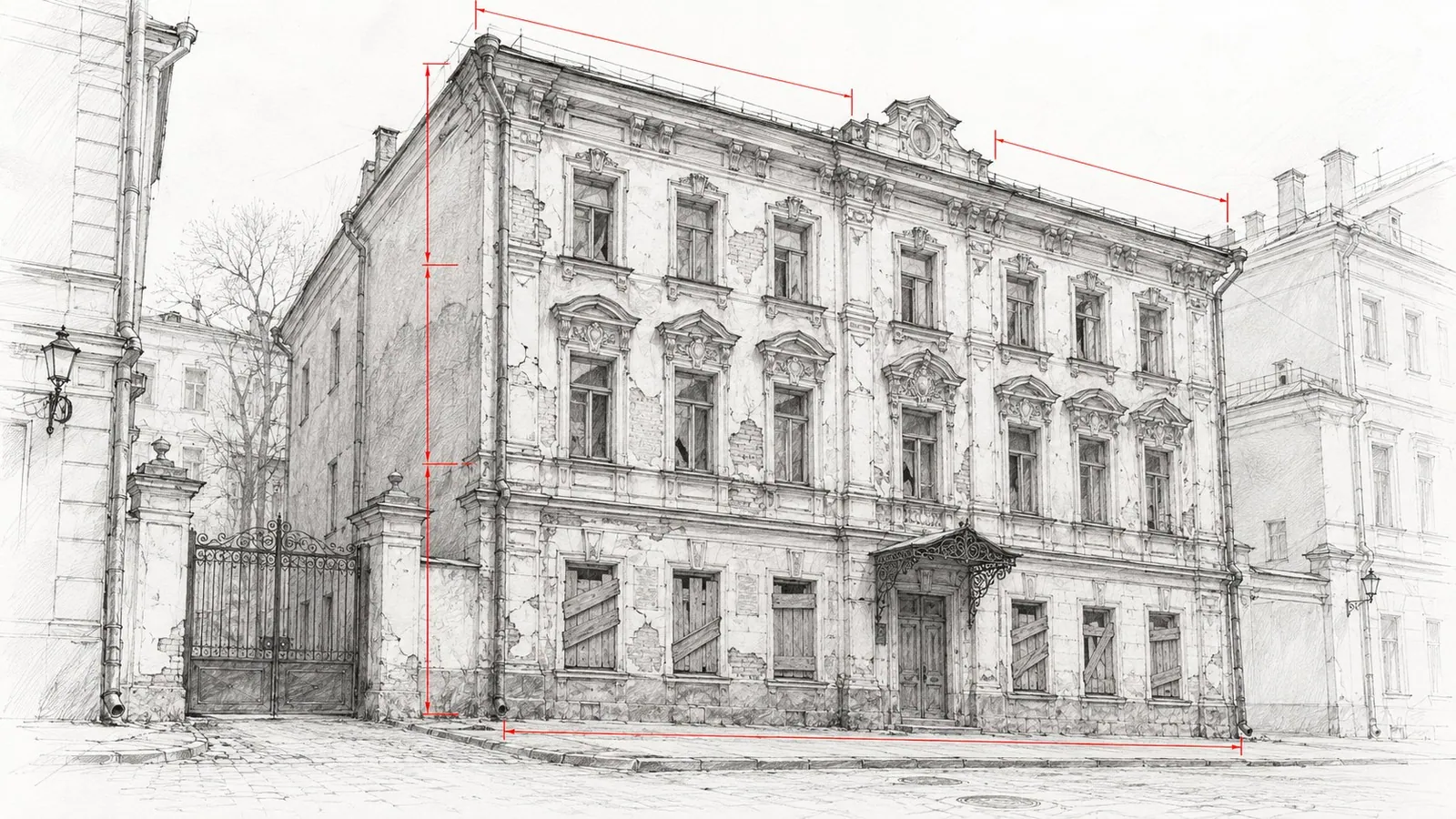
Another interesting case from my practice has to do with restoring heritage buildings. A private client came to me who was planning to buy a historic building in the Arbat district. Since the property was being sold at a DOM.RF auction, the client needed to understand how much the subsequent restoration and adaptation of the building would cost, and the price the building could fetch once restored. Following due diligence on the building and an analysis of market prices for similar properties, the client had a clear idea of the capital costs of restoration and adaptation, and an understanding of the ceiling price for the bid, beyond which “collector's interest” begins. As a result of our work together, my protégé bought the building at auction, and I began restoring it as general contractor.
Outcome
Professional analysis of legal, commercial and technical information helps you save money and make the right decisions.
Three service blocks
discuss your project
+7 (989) 577-75-77Elena, office administrator
info@endovitckii.ruOffice2 Krylatskaya Street, Moscow
The administrative building on the Rowing Canal, gallery, floor 3, offices 10-12.
Free parking. Passes are arranged through the office administrator.