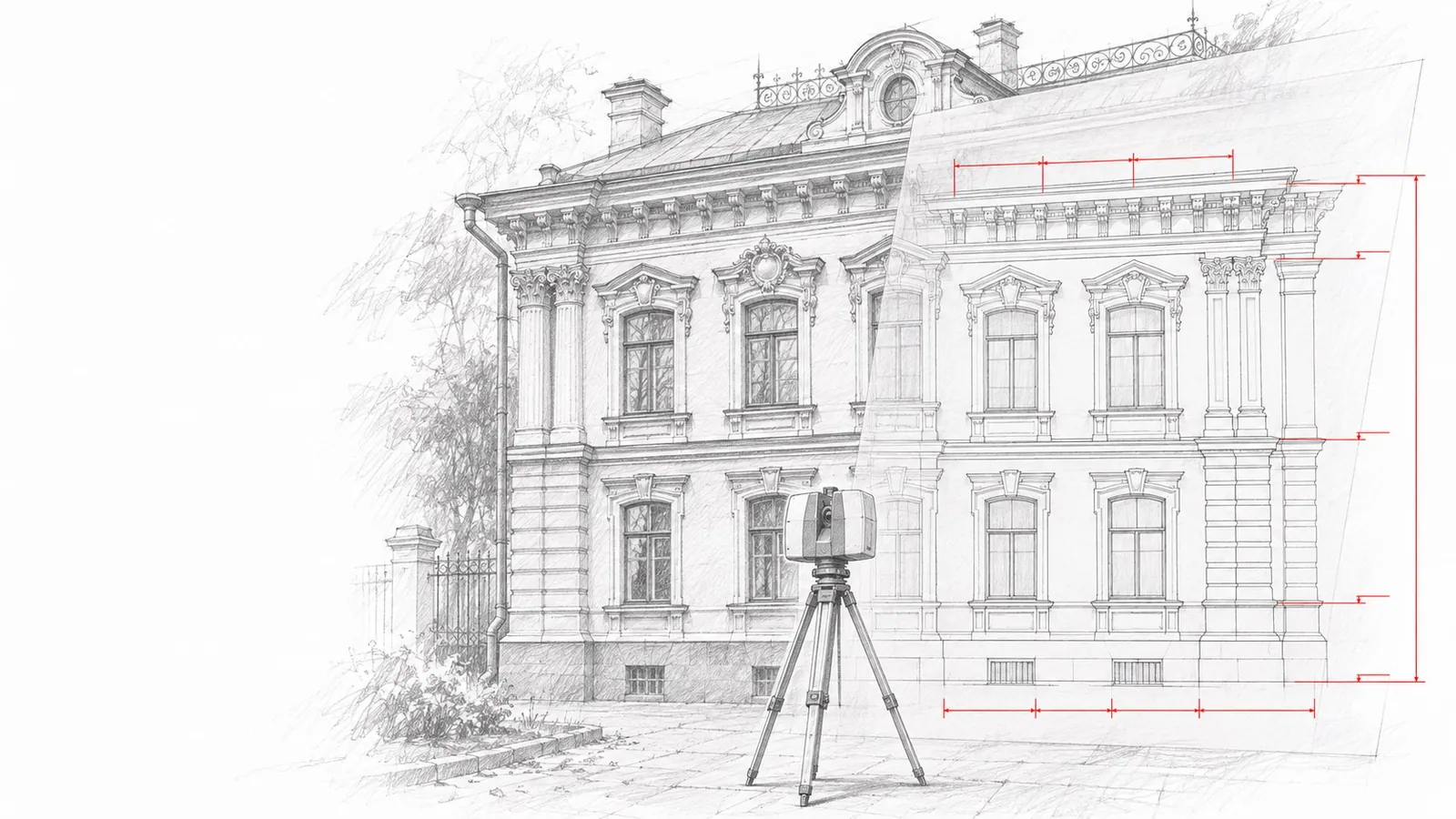
To understand how ill the patient is, you have to examine them. The protected features of a listed building will not let you bulldoze century-old ruins to hell and put up identical new ones. As they do in Japan, for example. Our national way of restoration is far more complicated: restoring and recreating what has been lost. Just knocking it down is for wimps.
Historical and scientific research is one of the most intriguing and instructive stages of restoration. This is what sets it apart from new construction. The building has already been built, and quite a long time ago at that. In the century before last, say. Our task is to give it back its structural strength and adapt it to modern conditions within historical constraints. Historical and bibliographic research lets us immerse ourselves in the building's history. We find out whose energy these walls have absorbed and how many rebirths the mansion has been through. We come to understand the logic behind its approved protected features. And we can propose and justify the changes needed to bring a modern adaptation to life.
At this stage we gather all the information about the building and transfer it into a point cloud for the design work to come. We identify elements in a dangerous condition and draw up priority measures.
Case study
One of my clients once bought a timber log house in the city centre to adapt it as a modern office. His eye was caught by the building's log facade, which stood out among its neighbours. Its look was one of the reasons he bought it. At the research stage, however, it turned out that the building had never looked like that in any period of its history. What he saw was its bare structure without the facade finishes, which had come up for auction in that unfinished state. The previous restorer had been thrown off the site and stripped of his licence for deciding that the building could be taken apart completely and every log replaced with a new one. Which came as quite a surprise to the heritage authority.
The building is a rare example of the modest timber architecture of early 20th-century Moscow. On the outside, the log frame was plastered to look like stone in the classical style.
Three service blocks
discuss your project
+7 (989) 577-75-77Elena, office administrator
info@endovitckii.ruOffice2 Krylatskaya Street, Moscow
The administrative building on the Rowing Canal, gallery, floor 3, offices 10-12.
Free parking. Passes are arranged through the office administrator.